
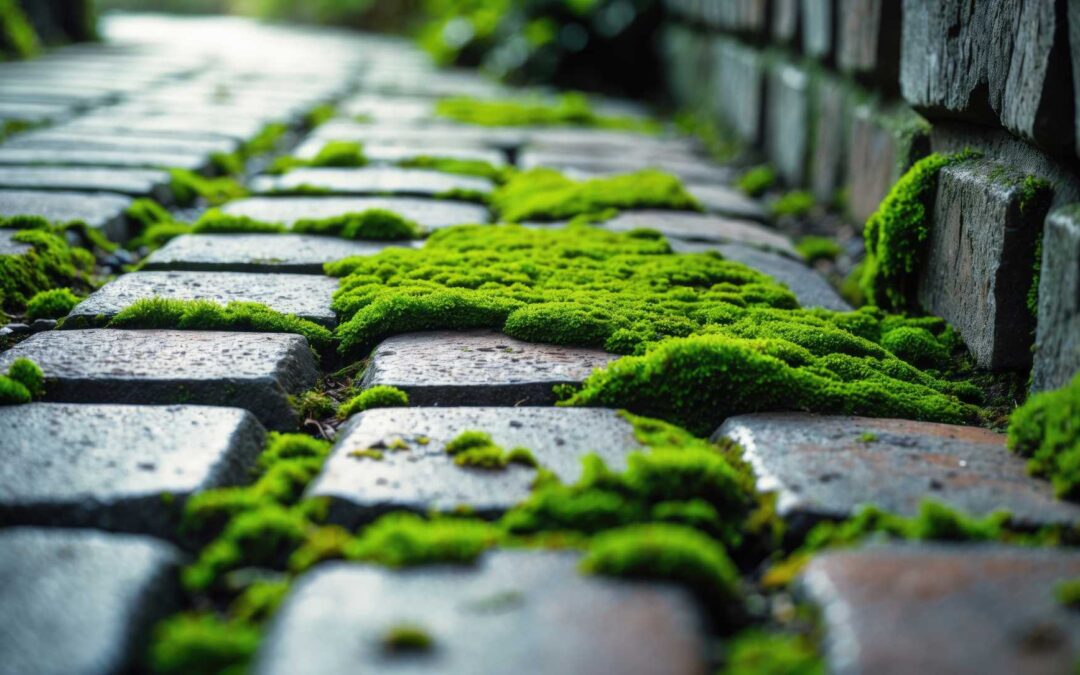
If moss is creeping across your lawn, getting rid of it comes down to two steps: remove the moss that’s there now, then change the conditions that let it grow. Killing moss without fixing shade, drainage, compaction, or thin grass usually means it’s back by next spring.
Moss is one of the most common lawn complaints we hear about from homeowners in Bothell and across Snohomish and King Counties. Our long, damp fall and winter months give it plenty of time to spread while the grass is barely growing.
The good news is that a mossy lawn can usually be turned around. Here’s what causes it, how to remove it, and how to keep it from taking over again.
Why Is Moss Growing in My Lawn?
Moss doesn’t push grass out. It moves into space the grass has already given up.
In Western Washington, moss growth picks up with the fall rains, when cooler temperatures and low light slow the grass down and leave less competition, as WSU Extension’s Pacific Northwest Gardener’s Handbook explains.
When turf is thin or struggling, moss fills the gaps. It does especially well in conditions grass doesn’t like, which is why it shows up in the same spots year after year. According to WSU’s Hortsense fact sheet on lawn moss, common causes include:
- Shade from trees, fences, or buildings
- Soil that stays wet or drains poorly
- Compacted soil
- Low soil fertility
- Acidic soil
- Improper watering
- Thin or unhealthy grass
Most yards have more than one of these going on. A shady corner with compacted soil and poor drainage is close to perfect for moss.
1. Figure Out What’s Causing It First
Before you buy a moss killer, walk the lawn and look at where the moss is thickest.
Is it under a big tree? Along the north side of the house? In a low spot where water sits after rain? Near a walkway where everyone cuts across the grass?
Those patterns tell you what needs to change. A soil test can also help. It will show whether your soil is acidic or low in nutrients, so you aren’t guessing with lime or fertilizer.
This step takes a little time, but it’s the difference between a one-season fix and a lasting one.
2. Get Rid of the Moss You Have Now
Once you know why the moss is there, you can clear it out.
For lighter moss, a firm rake or a dethatcher can pull a lot of it loose. For heavier moss, many homeowners use a moss control product first. Many of these products turn the moss dark brown or black as it dies, and then it can be raked out.
Lawn moss products generally fall into two groups:
- Sulfate-based products like iron sulfate (also sold as ferrous sulfate) or ammonium sulfate. These set the moss back while feeding the grass. Ammonium sulfate does more to help the lawn grow, while iron sulfate mostly gives the grass a deeper green color.
- Soap-based products made with potassium salts of fatty acids. These target moss without harming the grass, but they can cause serious eye damage, so wear eye protection.
Skip roof and walkway moss products on your lawn. Many contain copper or zinc, which can injure or kill grass.
A few tips:
- Read and follow the product label carefully, including how long to keep kids and pets off treated areas
- Keep iron products off concrete, pavers, and stone, since they can stain
- Rake out dead moss rather than leaving it in place
- Expect bare patches once the moss is gone
Timing matters here. Oregon State University Extension’s guide to managing moss in western Oregon lawns, where the climate is a lot like ours, recommends dethatching in early spring, roughly mid-March through April, rather than in fall. In fall, moss tends to outcompete the lawn through the wet months. In spring, the grass has a better chance to fill back in.
3. Fill Bare Spots Before Moss Moves Back In
Removing moss leaves open soil. If you leave it bare, moss or weeds will happily take it over again.
Overseeding with a grass seed suited to your conditions helps the lawn fill in. In shady areas, look for a shade-tolerant seed mix rather than a standard sun blend.
Loosen the soil lightly before seeding, keep the seed consistently moist while it germinates, and try to keep foot traffic off the area until the new grass is established.
Thicker grass is one of the best long-term defenses against moss.
Tired of Fighting Moss Every Year?
Moss usually points to a bigger maintenance issue, like thin turf, compacted soil, or a lawn that isn’t getting consistent care through the wet months.
Yardmaster’s Total Yard Care program keeps your whole yard on a regular schedule, including mowing, edging, weeding, pruning, and fall leaf cleanups, so problems get spotted early instead of piling up. Lawn amendments like moss control, fertilizer, and lime are available on request.
4. Fix Shade, Drainage, and Compaction
This is the step most people skip, and it’s usually why moss returns.
Shade: Thinning or raising the lower branches of trees can let more light reach the lawn. When you reseed shady spots, fescues such as tall fescue, creeping red fescue, or chewings fescue handle shade better than perennial ryegrass. Even so, no grass does well in deep shade. In spots that get very little sun, it may make more sense to replace grass with a planting bed, mulch, or a low-maintenance gravel and rock area.
Drainage: If water collects in the same areas every time it rains, the soil may need grading or other drainage improvements. Grass struggles in soggy ground, but moss handles it just fine.
Compaction: Core aeration loosens compacted soil so water, air, and roots can move through it more easily.
If a corner of your yard has fought grass for years, a design change may be the most practical solution. Our professional landscaping services can help you rethink problem areas so they look good with less work.
5. Keep the Lawn Healthy All Year
A healthy, dense lawn leaves moss very little room. A few habits go a long way:
- Mow at about 2 to 3 inches rather than scalping the lawn
- Keep your mower blade sharp
- Fertilize on a regular schedule so the grass stays thick
- Apply lime only if a soil test shows your soil is too acidic
- Clear leaves off the lawn in fall so they don’t smother the grass
- Avoid overwatering
Leaf cleanup matters more than many people realize. A layer of wet leaves sitting on the lawn for weeks blocks light and holds moisture, which is exactly what moss likes. Our seasonal yard cleanup services clear leaves and debris and can include lawn prep like dethatching, aeration, or reseeding as needed.
What About Moss on Patios and Walkways?
Moss on hardscapes is a separate issue from moss in the lawn, but the causes are similar: shade, moisture, and organic debris.
Sweeping regularly and keeping leaves off hard surfaces helps. For patios, walkways, driveways, and pavers that already have moss or algae buildup, hardscape pressure washing can restore the surface.
Many of the same habits also help with weeds, so take a look at our tips for preventing weeds in patios, walkways, and rock gardens.
Can You Get Rid of Moss for Good?
In Western Washington, probably not completely. Our climate is simply too friendly to moss.
What you can do is make your lawn a place where moss struggles and grass does well. That means removing existing moss, filling bare spots, fixing the conditions underneath, and keeping up with care through the year.
Homeowners who stay on top of it usually find moss becomes a small spring chore instead of a lawn-wide problem. If you’re in the Bothell area, our team provides yard care and landscaping in Bothell and surrounding communities.
Get Your Lawn Back From the Moss
A thick, healthy lawn doesn’t happen by accident, especially in our climate. If moss, thin grass, or soggy spots are making your yard harder to enjoy, Yardmaster can help.
Our team provides lawn care, seasonal cleanups, and full-service yard maintenance for homes throughout Snohomish and King Counties.
Tell us what’s going on in your yard, and we’ll help you figure out the right plan for your property.
Frequently Asked Questions About Lawn Moss
What is the fastest way to get rid of moss in my lawn?
Apply a moss control product according to the label, wait for the moss to darken, then rake or dethatch it out. Overseed the bare spots soon after so grass fills in before moss can return. For the best long-term results, do the raking and overseeding in early spring.
Why does moss keep coming back in my lawn?
Moss returns when the conditions that caused it haven’t changed. Shade, poor drainage, compacted soil, acidic or low-fertility soil, and thin grass all give moss an advantage, so fixing those is the key to long-term control.
When should I treat moss in my lawn in Washington?
Early spring, roughly mid-March through April, is the usual window for dethatching and overseeding in Western Washington. Fall is the time to focus on prevention, like fertilizing, clearing leaves, and fixing drainage, since moss grows quickly through the wet months.
Does lime get rid of moss?
No, lime doesn’t kill moss. It raises soil pH, which can help grass grow better if your soil is too acidic. A soil test will tell you whether your lawn actually needs it.
Should I rake out dead moss?
Yes. Dead moss left in place can smother grass and leaves little room for new seed. Rake or dethatch it out, then overseed and keep the area moist until the new grass is established.
What kills moss but not grass?
Lawn moss products made with potassium salts of fatty acids, or sulfate-based products like iron sulfate and ammonium sulfate, can control moss without killing healthy grass when you follow the label. Avoid roof and walkway moss killers, which often contain copper or zinc and can damage lawns.